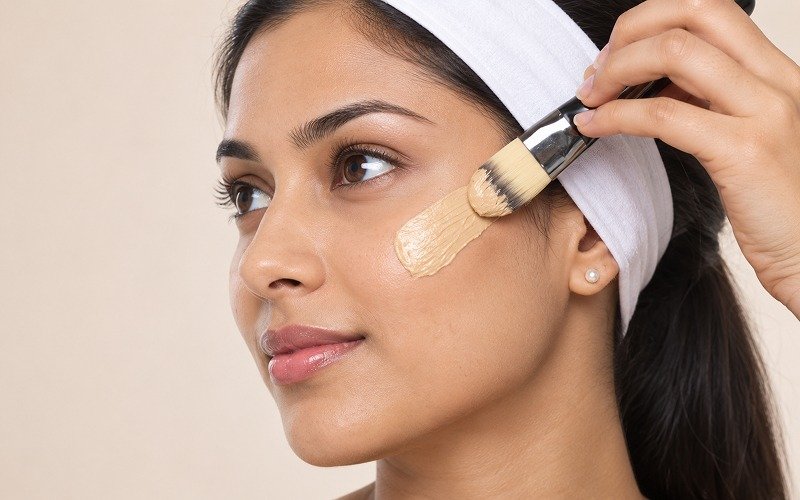
Wait, what? A routine for all Indian skin? That’s impossible because the damn country is too vibrant and mixed in all sorts of bewildering manner. Indian skin is not a skin type. There is no single foundation, moisturiser or primer that magically works for every Indian face. We have oily skin, dry skin, combination skin, normal skin and sensitive skin. Not to forget we have the small matter of Indian weather as well, tsk tsk.
Heat. Humidity. Pollution. Sweat. Airconditioning on repeat day in day out. Very sunny afternoons followed by very dry winters. So instead of giving everyone the same 10 step makeup routine, let’s break it down by skin type and suitable mid-affordable products: widely available in India. These widely reviewed brands also have strong user feedback, and far more importantly: make sense for the job they’re meant to do.
But wait, wait, wait: let’s go back a bit and begin with how great makeup in Delhi doesn’t begin with foundation: like not at all! It’s all under the skin really, and underneath is where we can sort of get it right.
Settling the Indian Skin Thing Problem
There is no scientifically defined “Indian skin type” in the way there are defined skin types such as oily, dry, combination, or sensitive. So, what does “normal Indian skin” generally look like?
A dermatologist would break it down into several separate characteristics:
| Characteristic | What is commonly seen in Indian/South Asian skin |
| Skin type | Often combination or normal to oily, but dry skin is also common |
| Melanin | Moderate to high, with relatively high eumelanin |
| Fitzpatrick phototype | Commonly III–V, though I–VI can occur |
| Undertone | Often neutral, olive, golden/yellow or warm; pink undertones also occur |
| Pigmentation | More prone to tanning, post inflammatory hyperpigmentation and uneven pigmentation |
| Sebum | Often moderate to high, particularly in the T-zone |
| Barrier | Not inherently “weaker”; can become compromised through climate, cleansing, pollution, treatments etc. |
| Sun response | Usually tans more readily and burns less easily than very fair skin, but UV damage still occurs |
| Visible ageing | Pigmentation and uneven tone can become prominent concerns, sometimes before obvious wrinkles |
The important bit is that “Indian” describes ancestry/geography, not a dermatological skin type.
The biggest misconception: Indian ≠ oily. This is probably the most important distinction if you’re writing your makeup piece.
A person can have:
- dry + Indian skin
- oily + Indian skin
- combination + Indian skin
- normal + Indian skin
- sensitive + Indian skin
- acne prone + Indian skin
And these aren’t mutually exclusive.
For example, someone can have oily skin with dehydration. Their forehead and nose may become shiny within hours, while their cheeks feel tight after cleansing. That’s not contradictory.
What is somewhat distinctive about Indian/South Asian skin?
The interesting scientific difference is pigmentation biology, rather than simply “skin type.”
South Asian skin generally contains more melanin than lighter European skin, and the distribution and activity of melanin producing cells contribute to a greater tendency toward hyperpigmentation.
- This matters enormously in beauty and dermatology because inflammation can leave a visible mark.
- A pimple may disappear in a few days, but the brown mark left behind can persist for weeks or months.
- That’s why Indian/South Asian skin can be particularly susceptible to: post-inflammatory hyperpigmentation (PIH) → acne, waxing, threading, irritation, burns or aggressive skincare → inflammation → darker residual pigmentation.
And this is also why sun protection isn’t merely an anti-aging step. UV exposure can worsen pigmentation and uneven skin tone even in relatively dark skin.
What about the famous “Indian skin has a yellow undertone”?
This is another oversimplification.
Indian complexions can have:
- warm/golden undertones
- olive undertones
- neutral undertones
- cool/pink undertones
And surface colour isn’t the same thing as undertone.
Someone can have a medium brownish complexion with a distinctly olive undertone. Someone else with approximately the same depth of colour can be golden. A third person can be neutral.
This becomes particularly important when choosing foundation, concealer and colour corrector.
So after all this, we can’t remember the derma-terminology, no way. New tactics; simpler terms.
Book An Appointment now:
Makeup Routines for Indian Skin Types
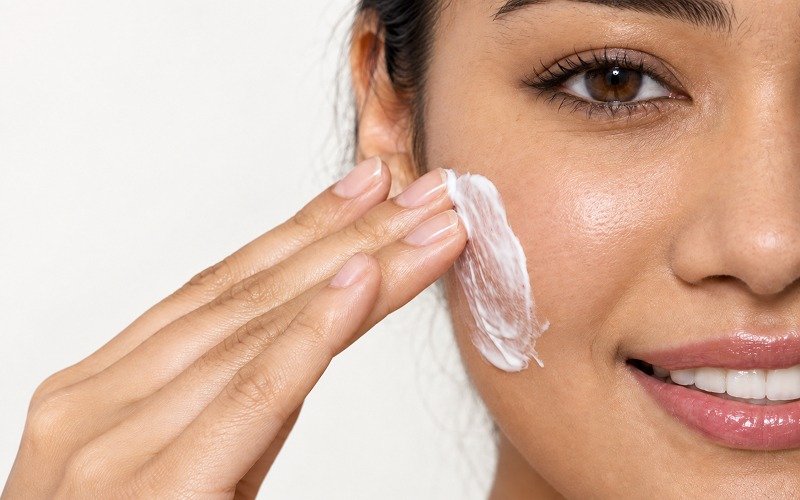
For “NORMAL” Indian Skin
Normal isn’t the new “new”, or is it the other way around? Anyhoo, skin is the easiest place to start: if your cuticles don’t tend to turn excessively oily or dry: you’re blessed and the goal isn’t to correct anything dramatically, yeah right!
However, it is a game played with hydration, from a smooth base and makeup that’s made to look like the enviable skin will settle upon.
Step 1: Be a Skincare Simp
Start with a gentle cleanser. You don’t need to channel your aggression into washing your face simply because you’re about to put makeup on.
Useful products include Simple Kind to Skin Refreshing Facial Wash is a good, affordable option. It is soap free, designed for sensitive skin and has an enormous volume of verified reviews in India. Its current MRP is around ₹450 for 150 ml, although retail prices will vary.
If the skin feels comfortable after cleansing, follow with a lightweight moisturiser.
Re’equil Oil Free Moisturiser is another inexpensive banger at around ₹295 and it works particularly well when normal skin starts behaving more like combination skin in India’s warmer months. It is also fragrance free and has good user feedback.
Step 2: You are Already Prime: so don’t over-prime
Normal skin doesn’t necessarily need a heavy duty primer.
A small amount of Lakmé Absolute Blur Perfect Primer is enough if the aim is to smoothen over pores and give that foundation something to hold onto.
Step 3: Go for a foundation that still looks like skin
For an everyday Indian makeup routine, Kay Beauty Hydrating Foundation is a particularly sensible choice.
It has a 20 shade range, a natural, skinlike finish and is certainly one to consider if the goal is polished rather than heavily slapped up skin. It currently sells for about ₹1,350 MRP, again prices will depend where you’re buying.
For lighter days (if that means anything), use minimal foundation instead of buying a completely different product.
The trick with normal skin: don’t fix what isn’t broken. You know you’re absolutely blessed!
FOR OILY / ACNE PRONE Indian SKIN
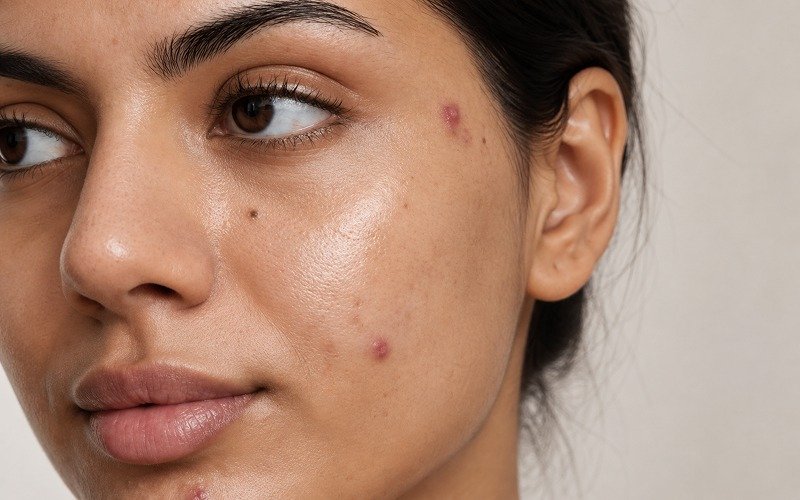
Now we’re entering very familiar Indian territory. Shiiiiiiittttttttt.
If makeup disappears from the nose by lunchtime, the forehead starts shining through your foundation and every pore suddenly seems to have its own spotlight, this is probably the section to read. It’s okay; be brave because here’s the important bit:Oily skin still needs moisture.
Skipping moisturiser doesn’t turn off the oil production rigs now does it? A lightweight moisturiser followed by a controlled amount of primer and foundation is usually a safe strategy.
Step 1: Cleanse without stripping
If oiliness and breakouts are the major concern, Minimalist 2% Salicylic Acid + LHA Face Cleanser is an accessible option. It is currently around ₹349 MRP and has thousands of user ratings.
That said, an exfoliating cleanser doesn’t have to be used every single time before makeup. If the skin feels dry or tight afterwards, switch to a gentler cleanser.
Step 2: Hydrate gently
Again, the Minimalist Vitamin B5 10% Moisturizer is a particularly good budget option here. It is oil free, lightweight and currently around ₹349 MRP, with more than 80,000 ratings on Nykaa. Minimalist doing the bare minimum and it makes sense.
Step 3: Be smart with the primer
This is where a mattifying or pore blurring primer earns its place.
Maybe it’s but no, really it is the Maybelline New York Shine Stopper Serum Primer which is specifically positioned for oily skin and is currently around ₹319 in Indian retail listings.
Don’t cover your entire face in primer like you’re icing a cake or getting ready to rumble.
Use it where makeup actually breaks down: usually the T-zone (the central region of your face: forehead, nose, and chin).
Step 4: Befitting Foundation
For oily skin in Indian heat, Maybelline Fit Me Matte + Poreless has remained a remarkably sensible choice for years now.
It’s affordable, widely available and designed around oil control and a matte finish. Current Indian listings put it around ₹329 MRP, with more than 700,000 )you can’t buy those) ratings on Nykaa.
If more coverage is required, build it in thin layers.
And them; rather than powdering the entire face into oblivion: set only the areas that need it.
No Indian summer has ever needed another layer of unnecessary makeup.
FOR Dryish INDIAN SKIN
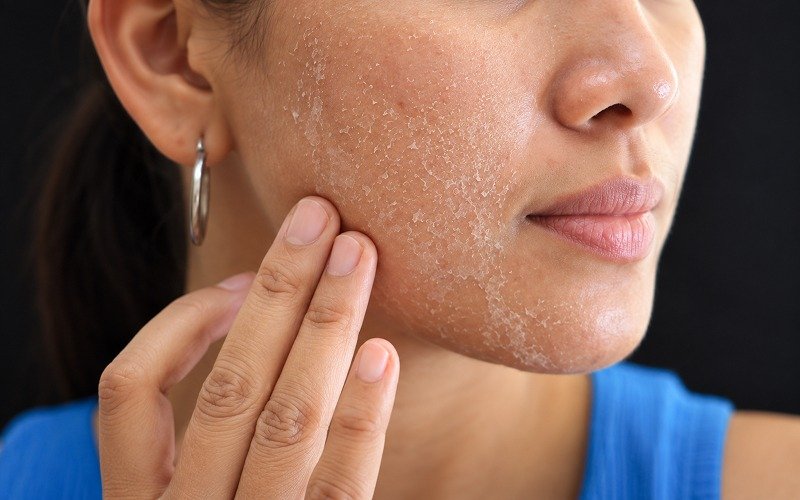
Drier Indian skin requires an almost opposite approach to that used on more lustrous Indian skin types.
The mistake is made usually while we try to overcompensate for the dryness by piling foundation on top like it’s raining but without hallelujah. That usually makes flakes look more obvious, and that is unacceptable!
The objective is soft, moisturised skin first. Makeup second, always!
Step 1: Do not strip the skin
A gentle cleanser is enough. Simple Kind to Skin Refreshing Facial Wash is a good budget choice here as well, particularly because it is soap (most harmful chemicals) free and has extensive positive feedback from Indian users.
If you’re trying to remove applied makeup, a cleansing balm can be useful.
Plum E-Luminence Simply Supple Cleansing Balm is currently around ₹500–₹550 (lasts quite a bit) and has strong user ratings.
Step 2: Moisturise properly, please
This is where Cetaphil Moisturising Cream has earned its stripes.
It is designed for dry to very dry sensitive skin, is widely available in India and currently has a 4.5/5 rating from more than 150,000 ratings on Nykaa. The 100g pack is selling for about ₹899 MRP but prices are going off in the inflated Indian economy.
Use a sensible amount and give it a few minutes to settle.
Step 3: Primer is optional
If the moisturiser has done its job, dry skin doesn’t necessarily need a mattifying primer, it’s well set. A hydrating primer can help, but don’t add one simply because every makeup tutorial tells you to screw that.
Step 4: Go for a hydrating foundation
Kay Beauty Hydrating Foundation is one of the better Indian market options for this skin type. It has a natural finish and a broad shade range, with an MRP of ₹1,350.
Apply it with a damp sponge if a softer, more natural finish is wanted.
And resist the urge to powder the whole face.
Dry skin + excessive powder = an unnecessarily long day of staring at your own flakes.
FOR COMBINATION INDIAN SKIN
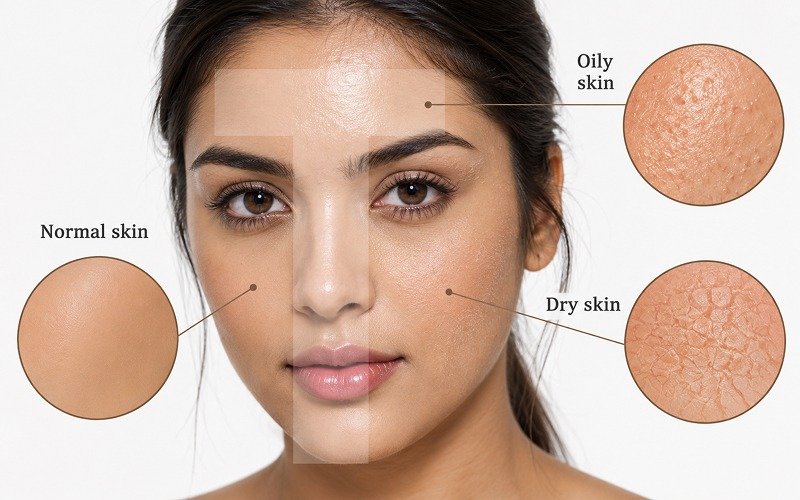
Like all things truly desi: combination is where things get interesting. And skin is no different. Because technically, you’re dealing with two different faces on the same face.
- An oily T-Zone.
- Potentially dry cheeks.
- Maybe normal skin around the jaw.
So why would the entire face need exactly the same product? It doesn’t.
Step 1: Keep that cleansing gentle
A gentle cleanser such as Simple Kind to Skin Refreshing Facial Wash works well as a starting point.
Step 2: Moisturise according to the geography of your face
Use a lightweight moisturiser such as Re’equil Oil Free Moisturiser.
Apply a little more to the drier areas and less around the nose and forehead. It is currently around ₹295 MRP and has more than 18,000 verified ratings on Nykaa.
Step 3: Prime different areas differently
This is perhaps the most useful trick in the entire routine.
You don’t need one primer for everything, everywhere, nowhere at once.
Use a pore blurring/mattifying primer around the nose, forehead and chin.
Leave the cheeks alone if they’re already smooth and comfortable.
Step 4: Foundation
Combination skin has the luxury of choice., duh! Because you’re more than worth it: L’Oréal Paris True Match is a good option if the aim is a natural, blendable base, while Kay Beauty Hydrating Foundation is a great choice when the cheeks lean drier.
The important thing is not to choose a foundation simply because the label says “combination skin”, that won’t cut it.
Prep the face according to what each part of the face actually needs.
Step 5: Conceal strategically
Concealer doesn’t have to become a second foundation, it only has a surreptitious name.
Use it where coverage is actually required — around the nose, under the eyes and on individual blemishes.
Then powder only the areas where you need longevity.
FOR SENSITIVE Indian SKIN
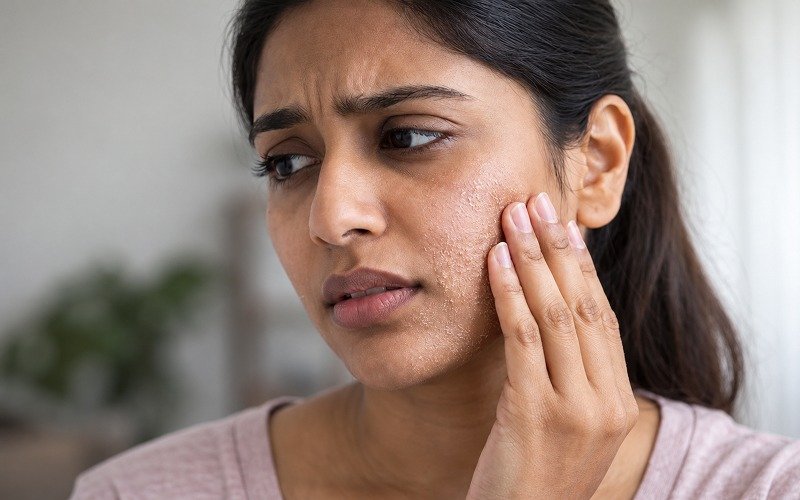
Sensitive skin is less about finding the most exciting product and more about finding the product that doesn’t make your skin angry, trust me nobody needs that.
If a product burns, stings or leaves the face red, it doesn’t matter how expensive, viral or beautifully packaged it is. It’s out.
Step 1: Be gentle, it’s better
Simple Kind to Skin Refreshing Facial Wash is a straightforward option. It is soap free, marketed for sensitive skin and currently has a 4.5/5 rating from more than 200,000 ratings on Nykaa.
For removing makeup, Bioderma Sensibio H2O is another reliable option and is widely available in India.
Step 2: Moisturise and leave experiments for another day
Cetaphil Moisturising Cream is again a winning choice if your skin is dry or easily irritable. Its formulation is designed for dry to very dry sensitive skin and it has an enormous volume of positive Indian user feedback.
Step 3: Uncomplicate the makeup
For sensitive Indian skin, this is not the section where we recommend eight new actives, three primers and a foundation with seventeen skincare ingredients.
The fewer variables, the easier it is to identify what your skin likes.
If budget allows, Clinique Even Better Makeup is a premium option worth considering. It is widely available in India and has a long established reputation as a complexion product for people looking for a more conservative, skin friendly makeup option.
“So… is there actually a nearly perfect Indian makeup routine?”
Sort of. But it isn’t one routine. It’s a formula for building one. An “almost” universal version looks something like this:
Cleanse, then moisturise, apply sunscreen (daytime), use primer if needed, put on that foundation, use concealer where needed, powder strategically, use blush/bronzer, on the eyes, lips and then use setting spray, if required.
And then you can change the texture of those products depending on the skin type.
Remember the secret to good makeup is understanding what the skin underneath the makeup is asking for. And more than occasionally, listening to it.
Talk to our makeup artists in Punjabi Bagh